

Overview
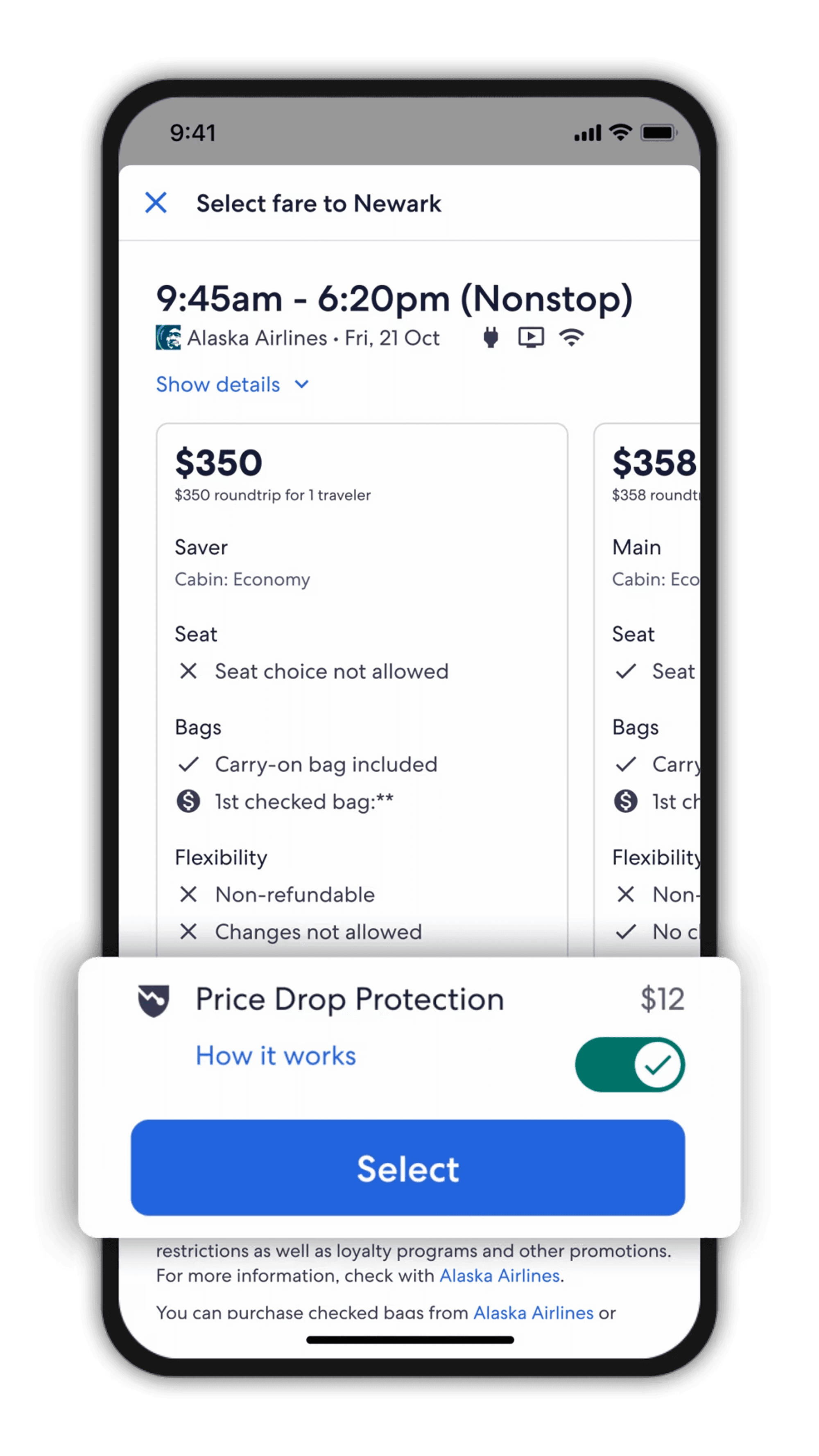
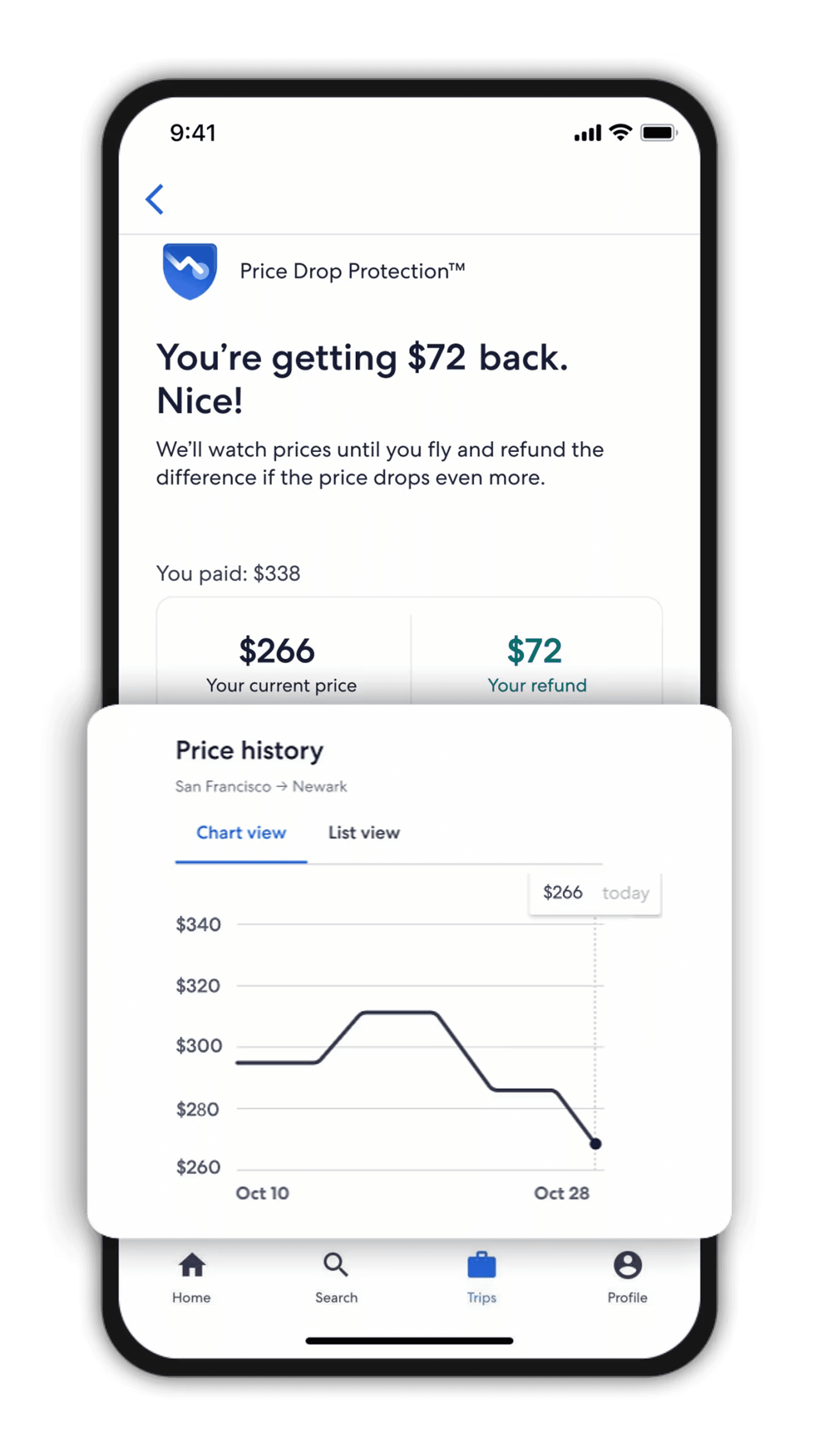
Current PDrP model
01
Add PDrP to your flight for a small fee.
02
Expedia tracks price (certain price matching) 1x a day until takeoff date.
03
User gets email + text notification updates and can check price changes on the PDrP Dashboard.
04
If the price drops on Expedia, traveler gets refund after the trip.
Problem
Travelers who purchase PDrP are not happy due to misinterpretation of the product’s intent.
Solution
Improve the post booking experience for the 46 million Expedia active users who have purchased PDrP and help them understand the product's intent, with a focus on the Expedia IOS PDrP model.
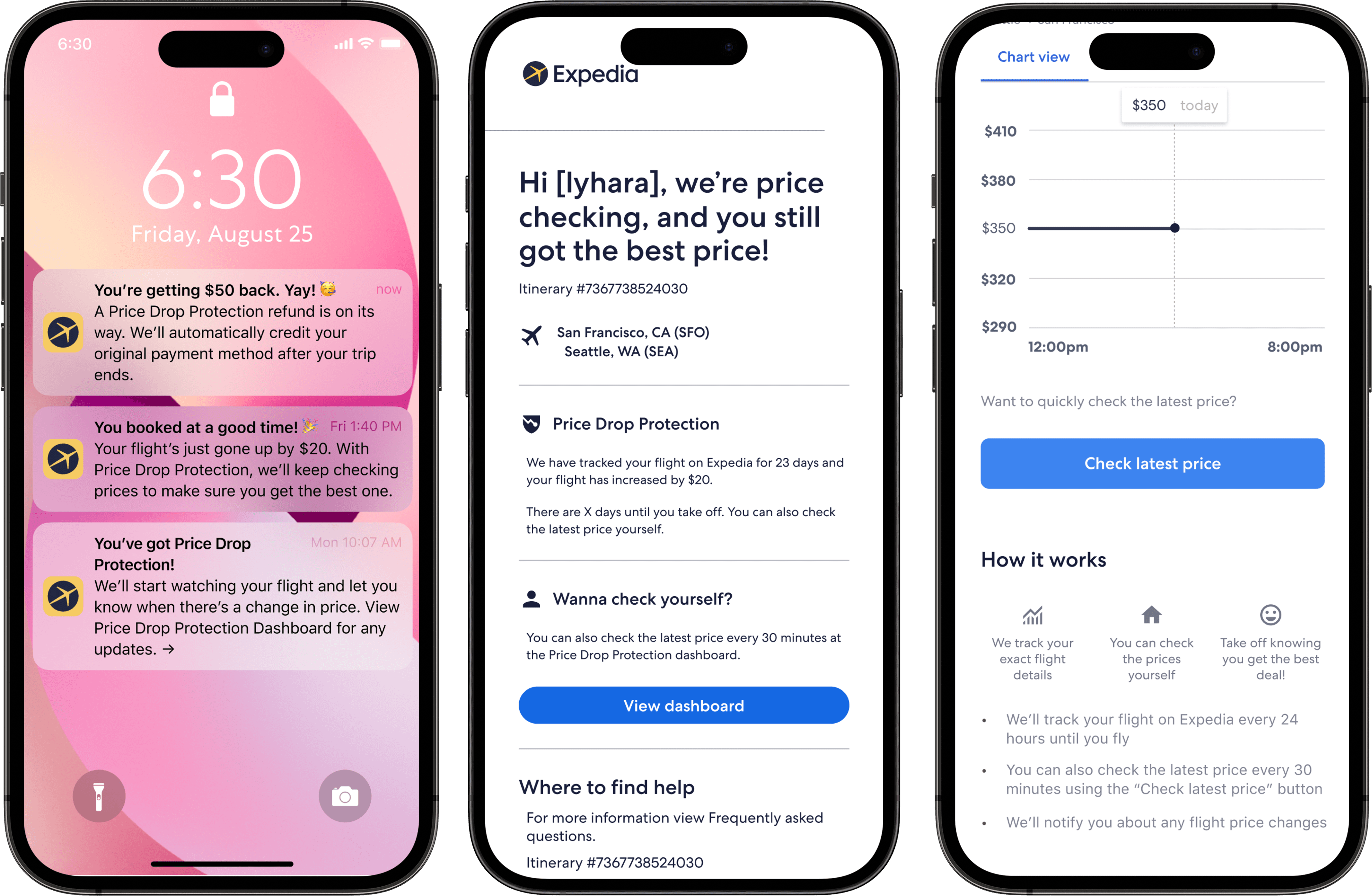
Final design concepts
Double Diamond Approach
My team and I used the Double Diamond method as a guide. Using expansion and compression, we solidified our understanding of users before exploring potential solutions. Since the project would continue past my internship, we prioritized redesigns to align with development milestones
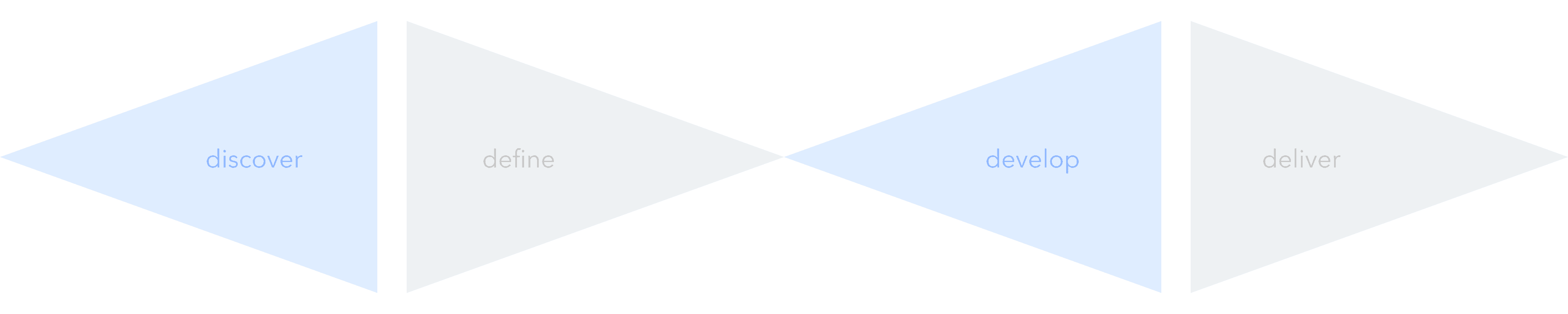
Discover
We reviewed prior UX research, product data, and traveler reviews, then brainstormed ideas in Miro to understand user pain points.
Define
We synthesized insights into a clear problem statement. We also identified root causes of gaps between the product and the user needs.
Develop
We created a strategy with three focus areas to prioritize improvements based on potential impact.
Deliver
We implemented solutions across product touch points: terms and conditions, emails, and the app experience.

Building My Knowledge
A newcomer, learning the product and domain helped me empathize with the user. I began by researching Expedia Group work expectations and the current ecosystem of the PDrP product.
Work Expectations
Understanding Expedia Group documentation
Preparing questions to ask my design manager and mentor
Understanding my team and everyone’s roles
PDrP Ecosystem
Use Figma files to understand design standards and constraints
Looked at previous work done for PDrP
Going through Expedia Group’s Design System
Understanding the ecosystem of PDrP through app research
Overarching Business Goal
"Our mission is to power global travel for everyone, everywhere."
With a positive and delightful PDrP experience, customers are more likely to continue using Expedia Group products with the confidence that the company has their best interests in mind. As a result, there is a built loyalty between Expedia Group products and the customers.
Discovery Work
The product had already undergone years of improvements, so we built on existing research. We analyzed customer feedback, user behavior, and competitor offerings to identify opportunities.
In particular, we used the Net Promoter Score (NPS) of customer reviews, which revealed common themes among dissatisfied customers. One observation was that users had the wrong mental model of PDrP. Thus, we conducted a competitive analysis to see what models they may also be familiar with.
Through our competitive analysis, we discovered that:
PDrP is unique from most models in that it helps users save money after booking their flight
However, many of the similar models are free. Users may not engage with the product as much if they are not paying a premium.

Root Causes of Problems
01 Lack of information and clarity
Unclear information and ambiguity about how price match between flights works leads to travelers checking prices incorrectly.
02 Poor leverage of user flow
Users are not visiting crucial parts of the user flow, missing opportunities for education and correct engagement.
03 Missing user persona
There are two users: travelers who "sit back and relax" and travelers who want to engage. Currently, the product only cater towards the first.

User flow—not fully leveraged
User Personas
Root cause #3 is an incomplete user persona guide. Utilizing the job-to-be-done methodology, I identified the two travelers we are designing for.
01 Set it and forget it.
"When I purchase PDrP for my flight, I want a peace of mind knowing that Expedia will ensure I get the best price."
02 Let's make it happen.
"When I purchase PDrP, I want to actively track price changes so I can feel confident I secured the best possible deal."
User 02 needed to also be factored into the new designs, as the priority was on User 01 previously.

Ideation Sprint
Miro ideation sprints helped the team combine and expand on ideas.
Miro ideation gathering (blurred for confidentiality)
Following the ideation, we were able to move onto the next steps:
Utilize the solutions brainstormed to start designing
Check with product and engineering to determine feasibility and prioritization of solutions
Key Design Considerations
Drawing Inspiration: I reviewed competitor patterns identified during the define-stage competitive audit, focusing on how visuals, animations, and text hierarchy communicated product intent well.
Leveraging Existing Elements: To ensure feasibility and proper resource allocation, I prioritized leveraging existing PDrP elements instead of introducing brand new designs, exploring how current touch points could be better orchestrated to drive user engagement.
Information Architecture & Content Hierarchy: To ensure accurate price-matching criteria were clearly communicated, I focused on text hierarchy and information architecture. As our content designer revised the post-booking copy, I experimented with different text structures to convey important information to users.
Product Alignment & Development Feasibility: To ensure accurate price-matching criteria were clearly communicated, I focused on text hierarchy and information architecture. As our content designer revised the post-booking copy, I experimented with different text structures to convey important information to users.

Leveraging Existing Touchpoints
To maximize resource efficiency, I focused on leveraging existing PDrP elements rather than introducing new concepts. For User 02, the proactive “Let’s Make It Happen” traveler, I redesigned underutilized touchpoints in the user flow to improve product understanding and guide users to the manual price check for accurate price comparison. This reduced cognitive load while increasing user confidence, satisfaction, and trust in the product.
User flow—not fully leveraged
Reimagining Text Communication
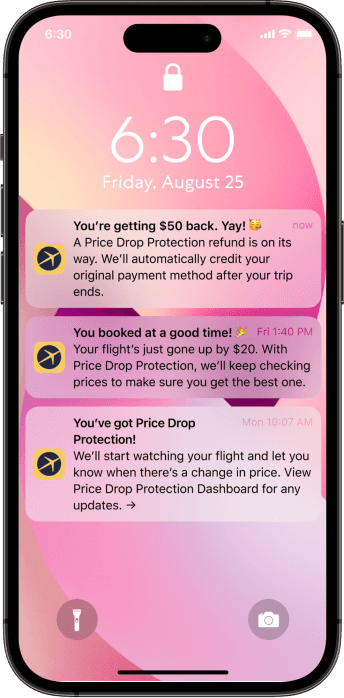
Reimagining iOS notification communication
One area where competitors stood out was their communication strategy—particularly how they used visuals, animations, and generative content to clearly convey intent and prompt action.
To complement this analysis, I also drew inspiration from everyday mobile experiences by reviewing application notifications on my own phone that I found especially engaging. Several patterns emerged:
Action-oriented language
Clear headings to establish hierarchy
Strategic use of emojis and visual cues (e.g., arrows, icons)
Text-based notifications paired with direct links
Drawing from competitor success and my own real-world engagement patterns, I incorporated these content strategies into the new PDrP communication model. This would reassure User 01 (“Set It and Forget It”) while empowering User 02 (“Let’s Make It Happen”) with visibility and control.
Education
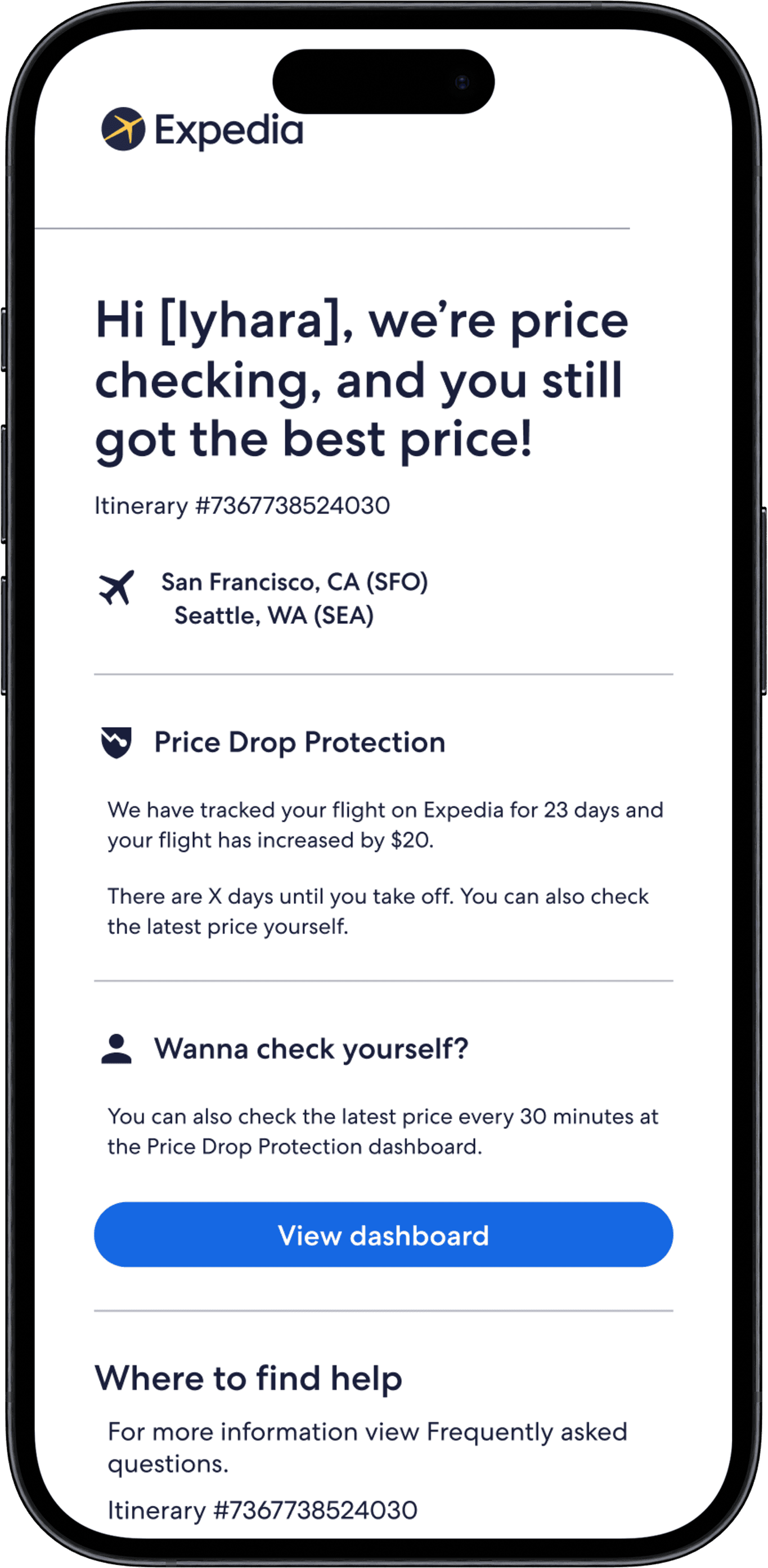
Traveler education through email
Users initially had the wrong mental model of how PDrP works, making it essential to clarify the price-matching criteria. By clearly communicating how the product functions and directing users to relevant information, we increase understanding and build trust. This aligns with the needs of both personas: reassuring User 01 while empowering User 02 to actively verify prices. In particular, it is important that User 02 knows the explicit details of PDrP, so that they engage correctly.
A positive and transparent PDrP experience supports Expedia’s mission to power global travel for everyone, everywhere. Now with correct product education, customers can engage confidently with Expedia Group products, fostering loyalty and long-term adoption.
Success Metrics
Successful Handoff of Designs
The IOS notifications strategy and the Dashboard “How We Check Prices” were approved for first quarter of development!
Recognition and Visibility from Design Leadership
I presented my work to a Design showcase of over 150+ UX and Content Designers. In addition, I was able to present to the Senior Director of UX Design of our department twice with positive feedback.
Addressed Expedia Group's Business Goal
Through setting goals for the redesign and following the double diamond design process, my team and I were able to work towards addressing the overarching business goal.
Learnings
This past summer at Expedia Group was a rigorous and exciting learning experience. I grew significantly as a designer in a nurturing team environment, learning to back my design choices with logic, research, and storytelling. Presenting our work in particular was a great exercise to get myself out of my comfort zone, teaching me the importance of a clear narrative and structure.
I also refined my design and corporate vocabulary, which improved collaboration and made group discussions more efficient. Through onboarding, I gained hands-on experience with Expedia’s comprehensive, live design system, learning how to leverage it effectively in my work. This was my first time working with an extensive, corporate design system.
Finally, I learned to be proactive in communication and research—reaching out for guidance, clearly reporting progress, and connecting with other designers and professionals to explore future opportunities—all of which enhanced team productivity and helped me grow as a professional designer.
Next Steps and Reflection
Utilizing Design Critique Session Feedbacks: My team was able to get many insights and feedback from other UX members.
Direct User Feedback: Unfortunately, we did not get to test with actual users. I would love to hear their feedback and thoughts on our new designs, as well as conduct testing.
Research Involvement: We did not get to work as closely with research as I would have liked. I also wish I spent more time doing external research on the product.
Adaptive, multi-device experiences: I only worked on mobile experiences for the scope of this project. However, the next step would be to support different devices and have responsive design work.